Cut your greenhouse energy bill without cutting quality
Smart climate control can slash your energy bill by 30% or more while delivering premium hydrangea stems.
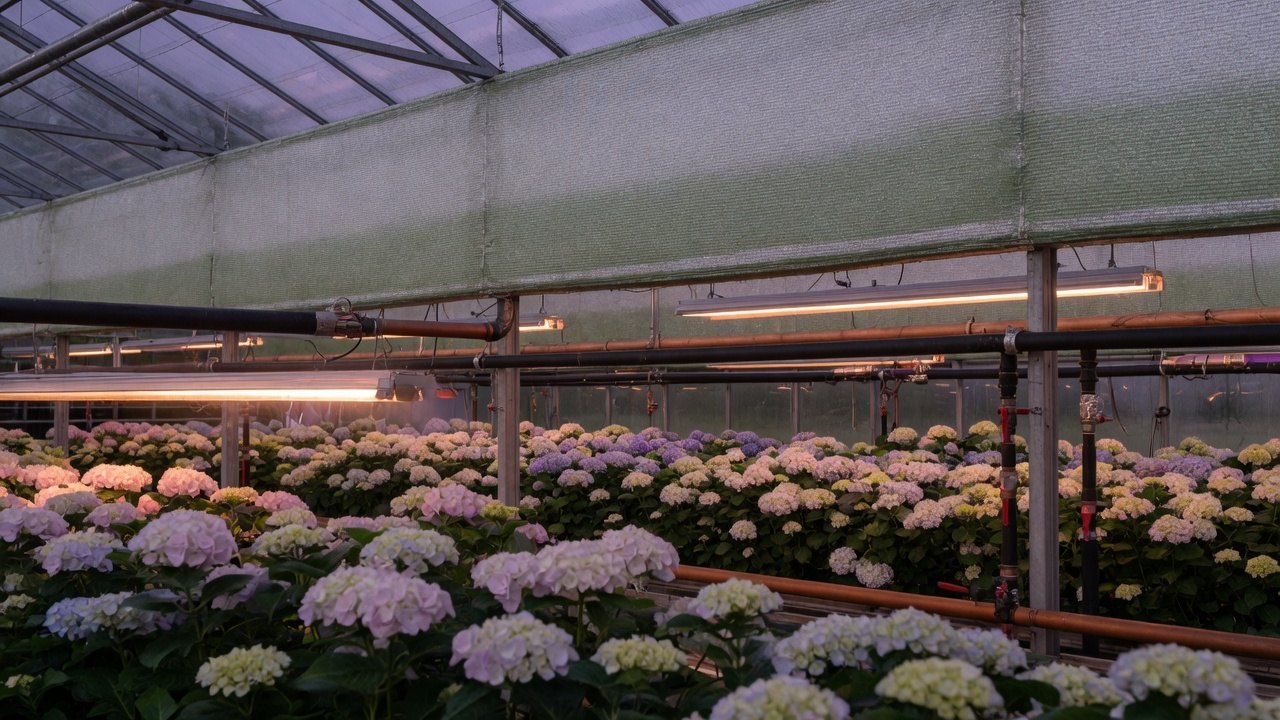
Energy is one of the largest operating costs in a modern greenhouse. For cut hydrangea growers, heating and lighting can account for 25-40% of total variable costs. But here is the truth that many miss: cutting energy does not have to mean cutting quality. With a disciplined climate strategy, you can reduce energy cost per stem while actually improving flower quality. The key is moving from reactive management to a system that anticipates, buffers, and delivers precisely what the plant needs.
Climate strategy: from guesswork to precision
Most growers set temperature and humidity based on gut feeling or outdated schedules. That leads to overproduction of heat on mild days and underheating on cold nights, both of which stress plants and waste energy. Instead, adopt a dynamic climate strategy using real-time sensors and predictive models.
- Use temperature integration. Allow the greenhouse temperature to float within a band of 2-3 degrees above and below the target. This leverages natural solar gain and reduces peak heating demand, cutting energy use by 10-15%.
- Match DLI to growth stage. Hydrangeas need different daily light integrals during rooting, vegetative growth, and flower induction. Overlighting early wastes electricity; underlighting later reduces flower count. Use a PAR sensor and automated shading to hit the exact DLI.
- Humidity control with smart venting. Keep relative humidity between 60-75% to prevent disease and transpiration stress. Use energy-efficient fans and dehumidifiers that recover heat rather than opening windows and losing warmth.
Screens and buffering: your first line of defense
Energy screens are not just for winter. A well-designed screen system can reduce heat loss by 40% and also reflect excess radiation in summer. But the magic is in buffering: using thermal mass (water tanks, concrete floors) or phase-change materials to store heat during the day and release it at night.
- Install double-layer energy screens. A movable aluminized screen combined with a fixed diffuser screen cuts heat loss and improves light distribution. Payback is often under two seasons.
- Use a buffer tank for heat storage. If you have a combined heat and power unit, store hot water in a tank and use it during peak demand. This allows the CHP to run at optimal efficiency, reducing fuel cost per kWh.
- Consider thermal blankets. For cold climates, deploy thermal blankets over the crop at night. They reduce heating demand by up to 30% and also speed up flowering by maintaining root-zone temperature.
“We reduced our gas consumption by 35% in the first year after installing energy screens and a buffer tank. The stems were actually thicker and the color deeper.” ; Abdulla Khadziev, Kantyshevsky greenhouse complex
Smart scheduling: align energy use with market premiums
Not all stems are equal in value. The highest prices come in early spring and late autumn when supply is low. By scheduling your production to hit those windows, you can afford higher energy input per stem and still improve unit economics.
- Use cooling to delay flowering. If your market pays a premium for hydrangeas in November, slow down the crop with controlled temperature dips. This shifts harvest by weeks without extra energy cost for heating.
- Time your supplemental lighting. Run lights only during periods of low natural light and high market prices. Use a weather forecast to plan ahead, and turn off lights on sunny days.
- Batch harvests. Instead of picking every day, harvest in two or three big batches per week. This reduces labor and energy for post-harvest cooling and storage.
Measure, adjust, repeat
The growers who win are those who treat energy as a variable to be optimized, not a fixed cost. Track your kWh per stem, your heating degree days, and your fuel cost per square meter. Compare with benchmarks from your region. Then adjust your screens, setpoints, and scheduling accordingly. It is a continuous process, but the payoff is predictable profit.
If you want a step-by-step system for optimizing your hydrangea production from climate to cutting, explore our flagship course Growing Hydrangeas for Cutting from A to Z. For a deeper dive into unit economics, read our business case analysis. And if you are ready to build your system today, contact us for a free diagnostic quiz.
Put this into practice
The flagship program turns thinking like this into a season-by-season system.
Explore the program