From family farm to next-generation company: a succession playbook
Modernizing the family operation is rarely a technology problem. It is a trust problem. Here is how the next generation earns the right to change things.
Across agriculture, the average farmer is ageing and the next generation is hesitating. In the EU, only around 12% of farmers are under 40. The operations that renew successfully are not the ones with the newest greenhouse. They are the ones where a successor modernized without blowing up the trust that holds the business together.
Why "just automate it" backfires
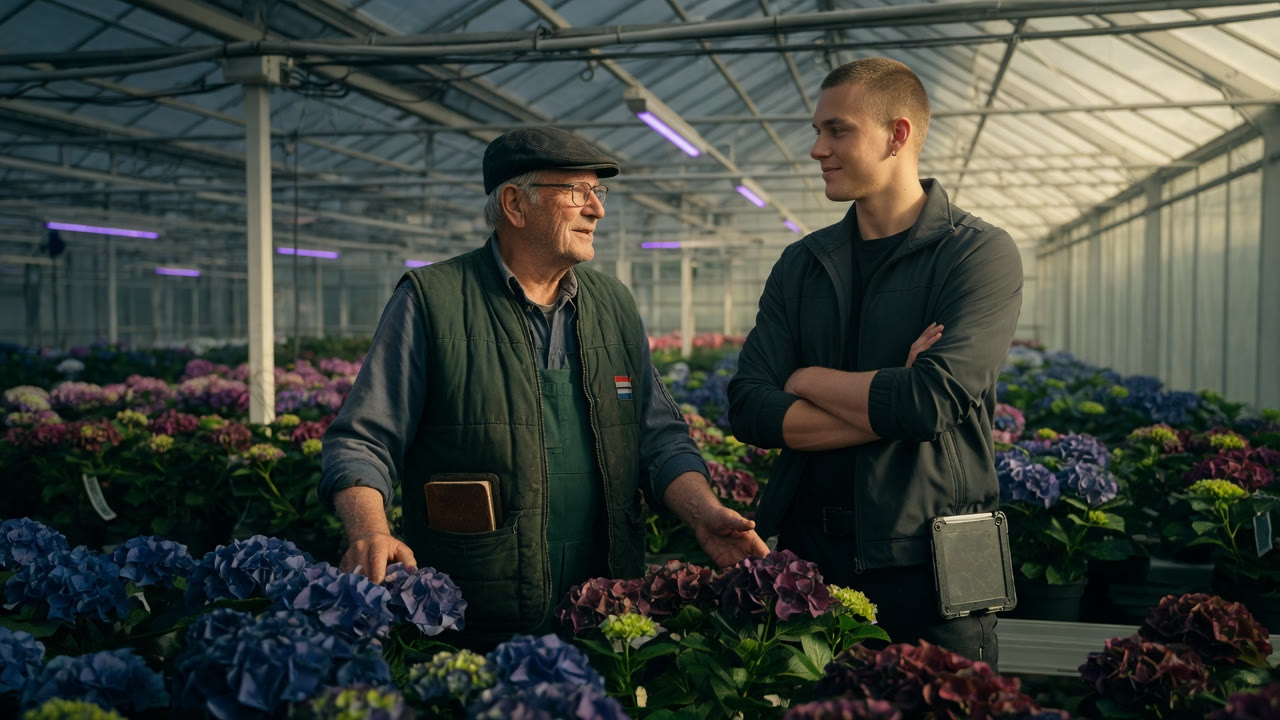
If you arrive home from the city and announce that everything your parents built is outdated, you will lose the argument before you start. The older generation is protecting decades of hard-won judgement. Respect that, and they become your biggest ally. Dismiss it, and every upgrade becomes a fight.
The sequence that works
- Prove one number. Pick a single, measurable improvement, a lower mortality rate, a tighter colour block, and let the result make the argument.
- Translate, do not replace. Frame new systems as protecting what already works, not erasing it.
- Bring the data, not the opinion. "I think" loses. "Here is what changed when we measured it" wins.
Succession is not a technology upgrade. It is a transfer of trust, paid for in proven results.
Build the identity, then the business
The next generation is not only buying knowledge. They are claiming the right to see agriculture as modern, profitable and respectable. That identity, "operator", "founder", "next-generation grower", is part of the value. It is also why the work has to look and feel serious, not like a hobby.
If you are stepping into a family operation, start with the entrepreneur path and the business-case tools. Bring the first proven number home. The rest of the conversation gets a lot easier.
Put this into practice
The flagship program turns thinking like this into a season-by-season system.
Explore the program