Grow for the buyer, not the yield: reading the cut-flower market
A higher-yielding variety that the market does not pay a premium for is not an asset; it is a structural margin leak that Dutch growers learned to avoid by putting market-fit above raw kilos.
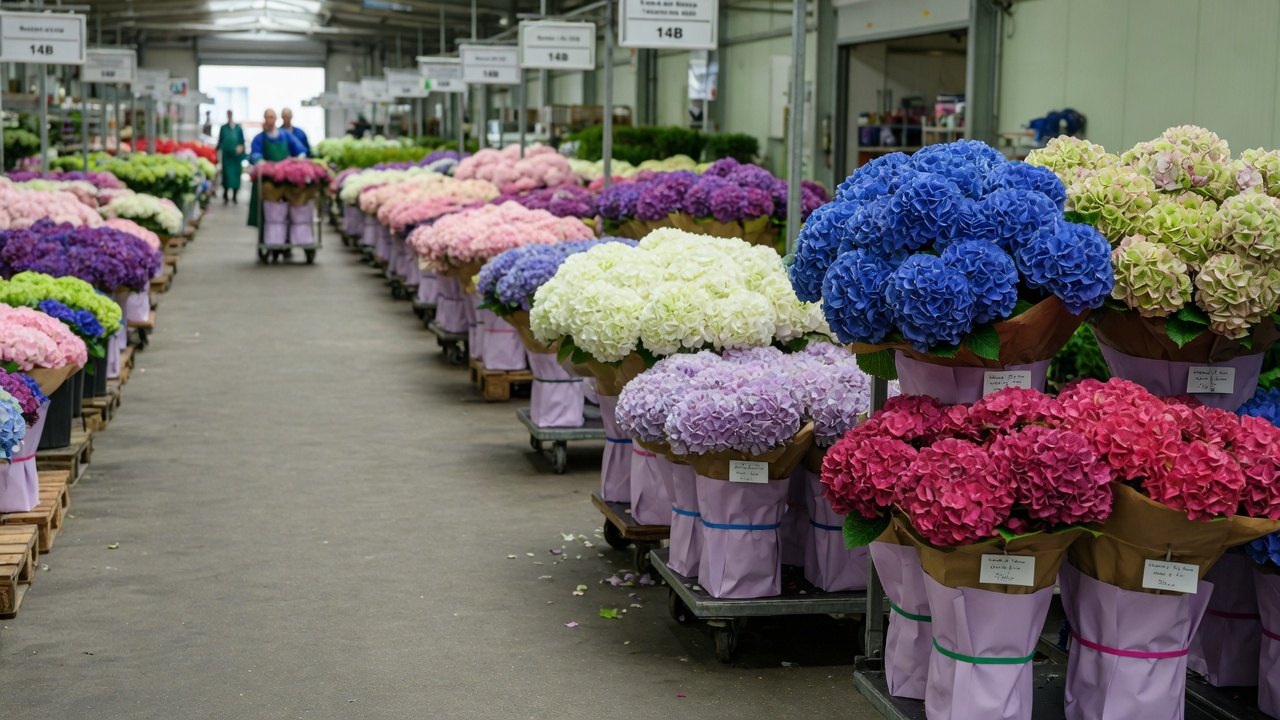
In the cut-flower business, yield per square meter is a vanity metric. Revenue per square meter is the reality. Too many growers chase the heaviest-producing variety only to discover that the market pays a discount for it. The result is a structural margin leak that erodes profitability season after season. Dutch growers know this well: they select cultivars first for color, stem quality, and buyer demand, and only then for yield. Market-fit is not a marketing exercise. It is the first business decision.
The cost of growing what the market does not want
A variety that produces 30 percent more stems but sells at 20 percent less per stem is not a win. It is a hidden loss that compounds with every square meter. The extra stems still require water, fertilizer, labor, and cooling. They occupy bench space that could have held a premium variety. And when the market does not pay a premium, the grower absorbs the difference. The problem is widespread: 80 percent of flower growers lose profit through weak flowering, watering and fertilizing errors, incorrect cutting and storage, and color not matching market expectations. The last point is the most expensive because it is locked in at variety selection.
How Dutch growers choose cultivars
In the Netherlands, variety selection is a business conversation, not a horticultural one. The questions are: What color is in demand for the target sales window? What stem length do buyers require? Does the variety ship well? Only after these are answered does yield come into play. The goal is not the most stems, but the most profitable stems per square meter. This approach requires a systematic view of the entire chain from breeder to buyer. It is the difference between operating a production facility and running a market-driven business.
- Color first. A variety that matches the current trend commands a premium. Dutch growers track buyer data and adjust variety mix annually.
- Stem quality. Straight, strong stems with good leaf retention are non-negotiable for export and high-end markets.
- Post-harvest life. Varieties that hold up in the cooler and on the shelf reduce waste and returns, directly improving margin.
- Yield per square meter. Only after the above criteria are met do growers optimize for stems per plant, and even then, they trade off yield for quality.
“We started spending less and earning more.” - Abdulla Khadziev, GM of the Kantyshevsky greenhouse complex, after aligning variety choice with market demand.
Reading the market systematically
Market-fit is not a one-time decision. It is a continuous feedback loop that requires data on what buyers actually pay, not what they say they want. Many growers rely on intuition or past experience, but the market shifts faster than intuition can track. A systematic approach uses sales data, auction results, and direct buyer conversations to update variety selection every season. This is where a business system becomes essential. Without it, a grower is guessing. With it, a grower is making informed bets.
From variety to system
Choosing the right cultivar is the first step. But it is only one part of a profitable system. The next steps are precise irrigation and fertilization, correct cutting and storage, and timing the harvest to market windows. All of these are covered in the Growing Hydrangeas for Cutting: from A to Z course, where lead expert Ard van Klaveren, with 25 years in commercial hydrangea cultivation, teaches the full system. The course also includes the business case for each decision, helping growers see the unit economics behind every practice.
If you are ready to stop chasing yield and start earning profit, start with the business case analysis or browse all programs. For questions, contact us. The market is waiting for the right flowers, not the most flowers.
Put this into practice
The flagship program turns thinking like this into a season-by-season system.
Explore the program