Pink, violet or premium blue: the chemistry Dutch growers control on purpose
Hydrangea color is not luck and it is not the variety alone. It is a chemistry you can steer, if you know which two variables actually matter.
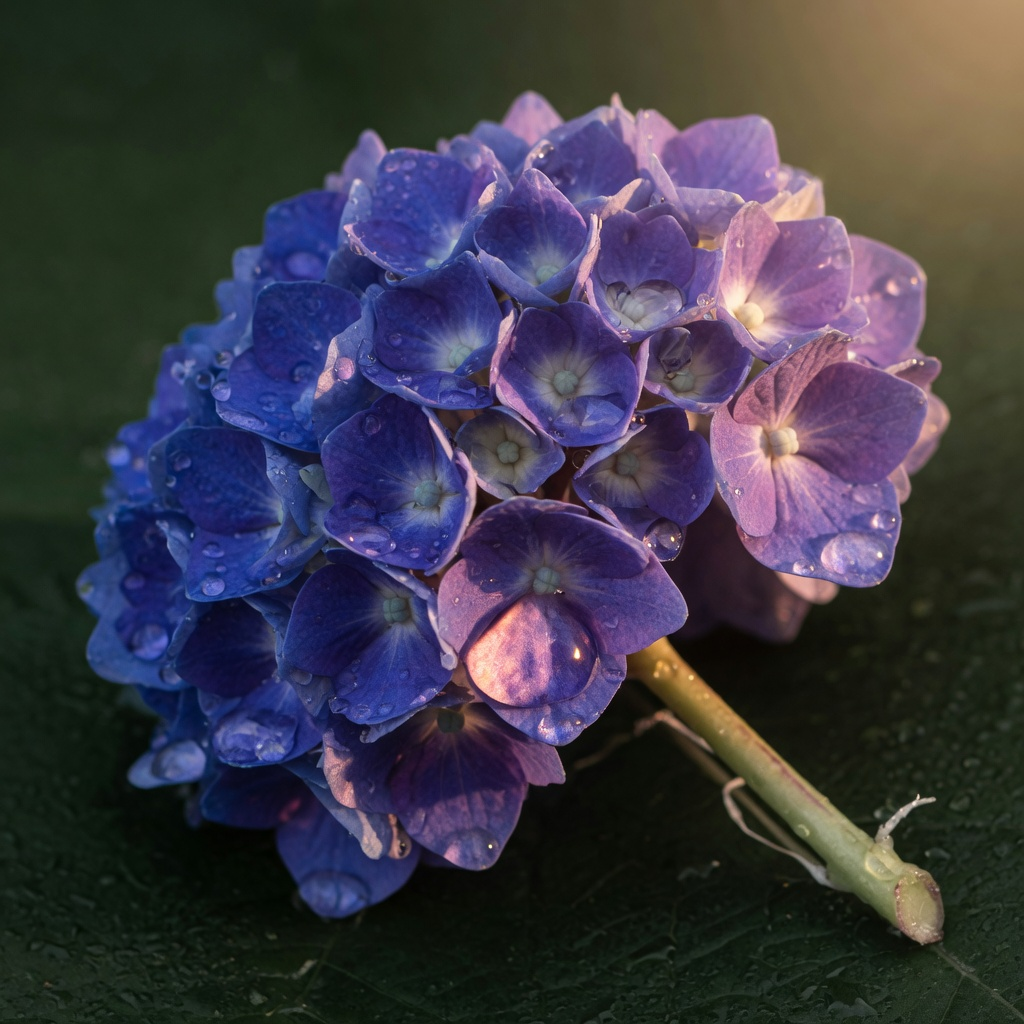
Buyers pay a premium for a specific blue. Most growers treat that color as something that either happens or does not. It is not. With the right cultivar, the color you ship is something you decide.
Two variables, not ten
For colour-responsive hydrangeas, two things dominate: soil pH and aluminium availability. Aluminium is what turns a bloom blue, but the plant can only take it up when the root zone is acidic enough. Get the pH wrong and the aluminium is simply not available, no matter how much is present.
- Higher pH, low available aluminium tends toward pink.
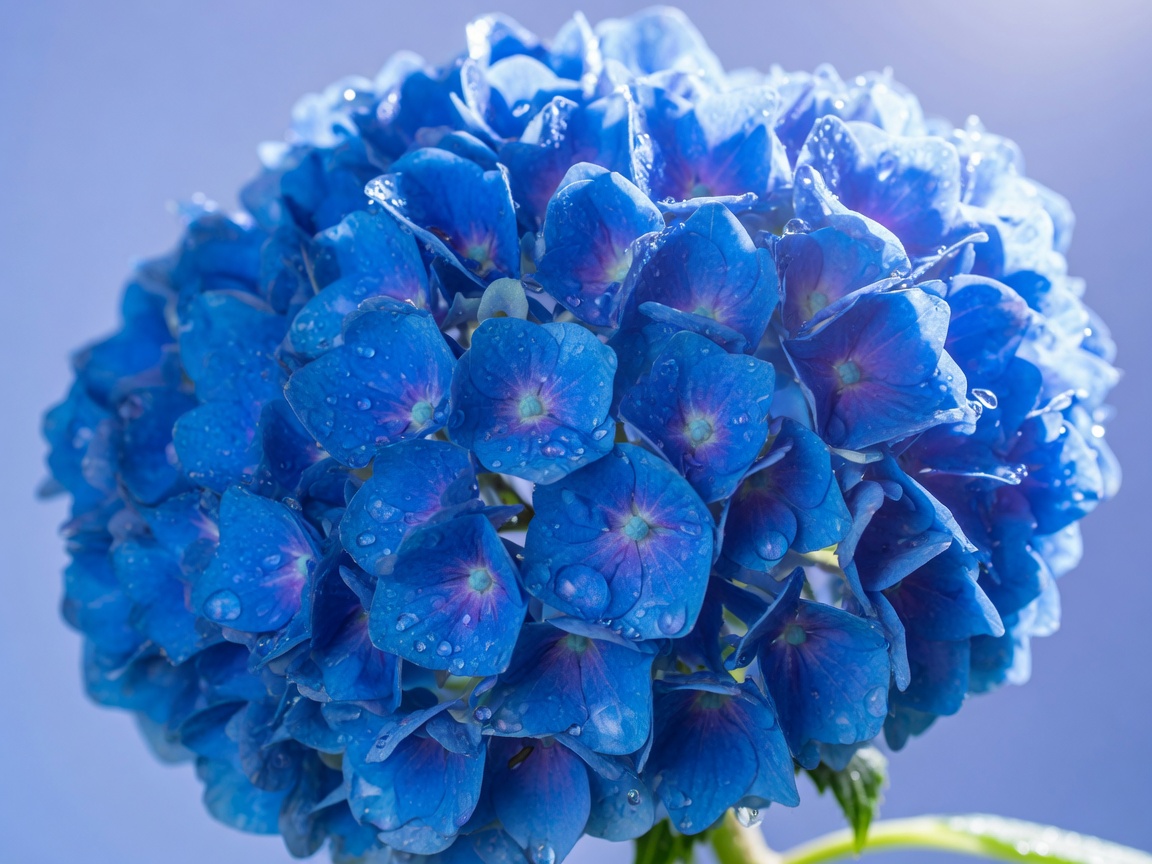
- Lower pH with aluminium available moves toward violet and then premium blue.
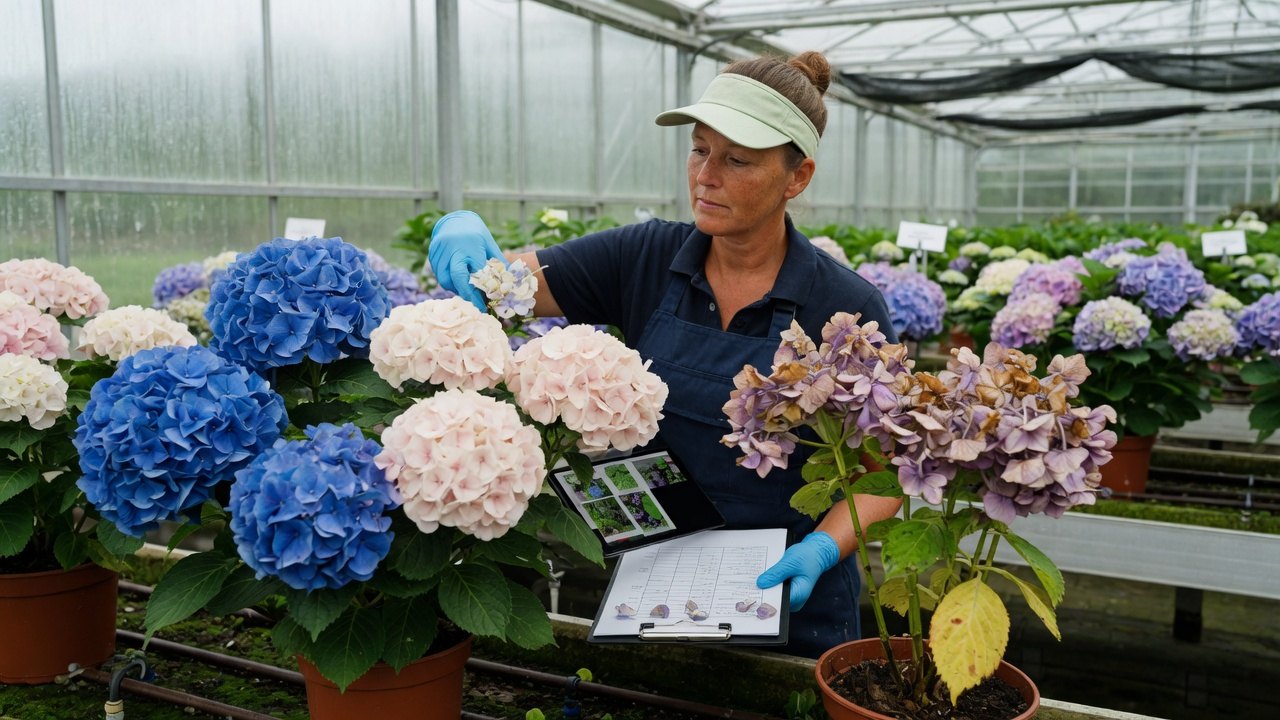
- The transition zone is where uneven, muddy colour happens, the kind buyers reject.
We do not hope for blue. We engineer it, by managing the root zone weeks before the colour is visible.
Timing is the hidden skill
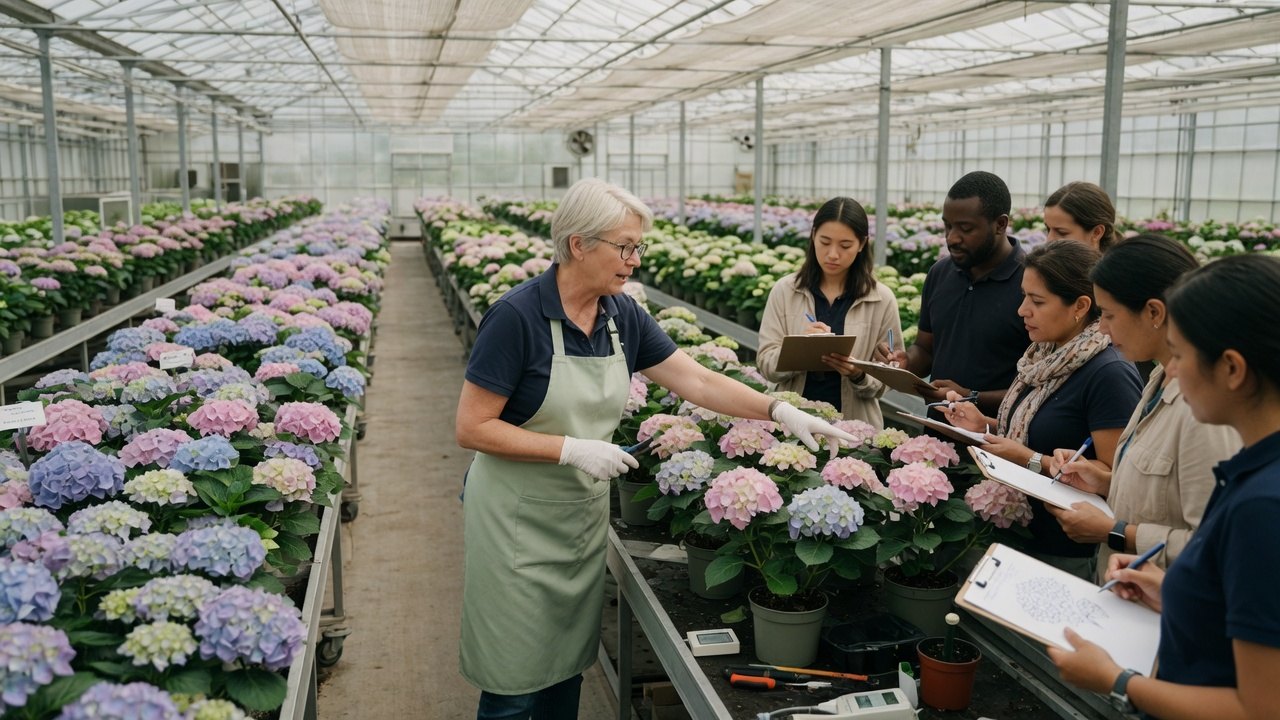
The mistake is reacting to colour you can already see. By then it is late. Dutch growers manage the feed and the root-zone chemistry on a calendar, ahead of the visible change, so the whole block lands on the same shade. Consistency across a block is worth more than a single perfect stem.
Colour manipulation is one module of the flagship hydrangea program, alongside the irrigation and fertigation logic that makes it repeatable.
Put this into practice
The flagship program turns thinking like this into a season-by-season system.
Explore the program