Prevention over panic: building a clean-crop protocol
Stop chasing pests with sprayers and start building a system that keeps them out from day one.
Every season I see growers reach for the sprayer the moment they spot a thrip or a spot of powdery mildew. That reactive reflex costs money, lowers crop quality, and builds resistance. After 25 years of growing hydrangeas, I know that a clean crop is not a matter of luck or heavy chemistry. It is a system you build before the first leaf unfolds. Prevention over panic is the only way to protect your margin and deliver the uniform, high-grade stems that buyers pay a premium for.
Hygiene: the foundation you cannot skip
Most pest problems start with something we brought in ourselves. Infested cuttings, dirty trays, weeds between the rows. A clean crop protocol begins with a zero-tolerance policy on incoming material. Every batch of cuttings from our partner Henselmans Strawberry Plants arrives with a phytosanitary certificate, but I still quarantine them for 48 hours. That simple step has stopped broad mites and root aphids from entering my greenhouse more times than I can count.
- Sanitize surfaces. Benches, floors, and irrigation lines are cleaned with hydrogen peroxide between crops. Organic debris is the number one hiding spot for fungus gnat larvae.
- Control the perimeter. We keep a 2-meter weed-free strip around the greenhouse. Weeds are reservoirs for aphids and whitefly. Gravel or fabric works well.
- Screen vents and doors. Fine mesh (0.6 mm) keeps out thrips and leafminers. It costs a little upfront but saves weeks of spraying later.
- Foot traffic discipline. Visitors and workers wear dedicated shoes or booties. One visitor from a tomato greenhouse brought in tomato spotted wilt virus. Now we have a strict protocol.
Scouting: know before you react
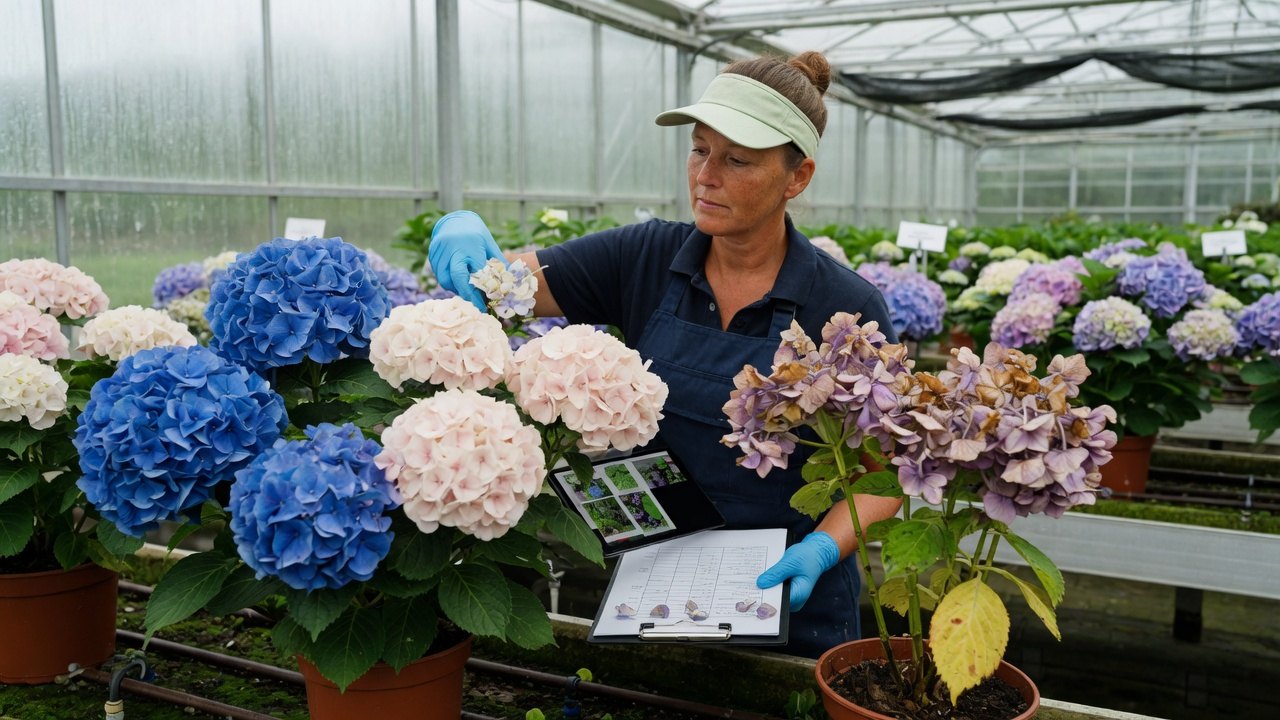
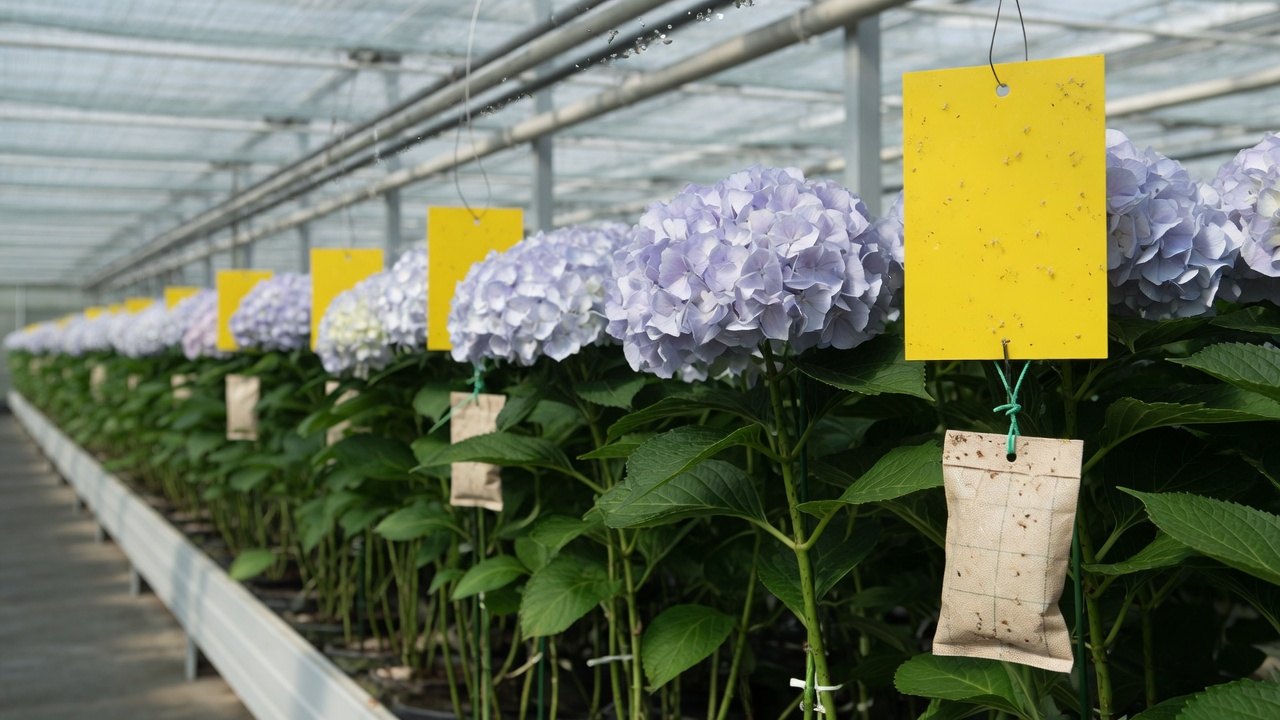
You cannot manage what you do not measure. I walk the crop twice a week with a 10x loupe and yellow sticky cards. Not just looking for pests, but for patterns. Where are the hot spots? Is the population growing or stable? I record everything in a simple spreadsheet. That data tells me when to act and when to wait. Reactive spraying often happens because the grower did not see the problem early. Scouting turns surprise into strategy.
- Set action thresholds. For thrips on hydrangea, I intervene when I catch more than 10 per card per week. Below that, beneficial insects keep them in check.
- Map the greenhouse. Pests always start near doors, vents, or hot spots. I mark these zones on a plan and scout them first.
- Use the IRISS system. Our technology partner 4MT developed a computer-vision sorter that also detects pest damage and disease spots during harvest. That feedback loop helps me adjust next season's protocol.
Biological control: let the good guys work
Once the crop is clean, I introduce beneficial insects preventively. This is not a cure for an outbreak. It is a maintenance crew that keeps the balance. We release Amblyseius swirskii for thrips, Aphidius colemani for aphids, and Hypoaspis miles for fungus gnats. The cost is about 0.02 euro per plant per week. Compare that to a full spray program: 0.05 to 0.08 euro per plant weekly, plus labor and resistance risk. Biological control works only if you start early and keep conditions stable. Temperature swings and broad-spectrum sprays kill the beneficials. That is why hygiene and scouting come first.
A clean crop is not a lucky break. It is a sequence of deliberate choices that compounds into predictable profit.
When to spray: the last resort
I am not against chemistry. I am against using it as a first resort. If a pest breaches the threshold despite my prevention, I use a selective product that spares the beneficials. For example, spirotetramat for scale insects or Bacillus thuringiensis for caterpillars. I never apply a fungicide unless I have confirmed the pathogen. A lab test costs 50 euros. A blind spray costs 500 euros in product and lost quality. The choice is clear.
Building a prevention-first system takes discipline, but it pays off every harvest. Your stems are cleaner, your plants are stronger, and your buyers notice. If you want to go deeper into the numbers and setup, explore the business case for biological control or browse other technical programs at Agro Academy. Start with hygiene, scout with purpose, and let biology do the heavy lifting. That is how you escape the chaos of reactive spraying and build a system that earns predictable profit.
Put this into practice
The flagship program turns thinking like this into a season-by-season system.
Explore the program