Substrate and water: the foundation most growers get wrong
Your substrate and water must be matched like a lock and key, or they will silently sabotage every hydrangea decision you make.
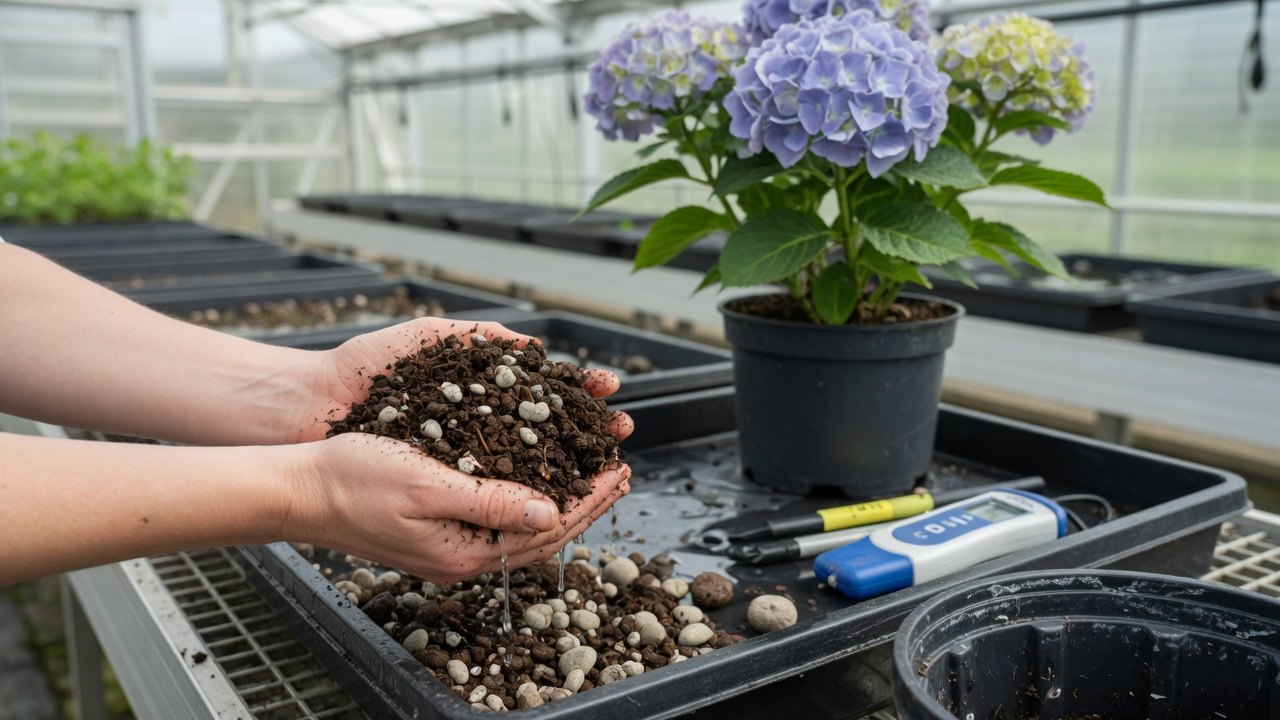
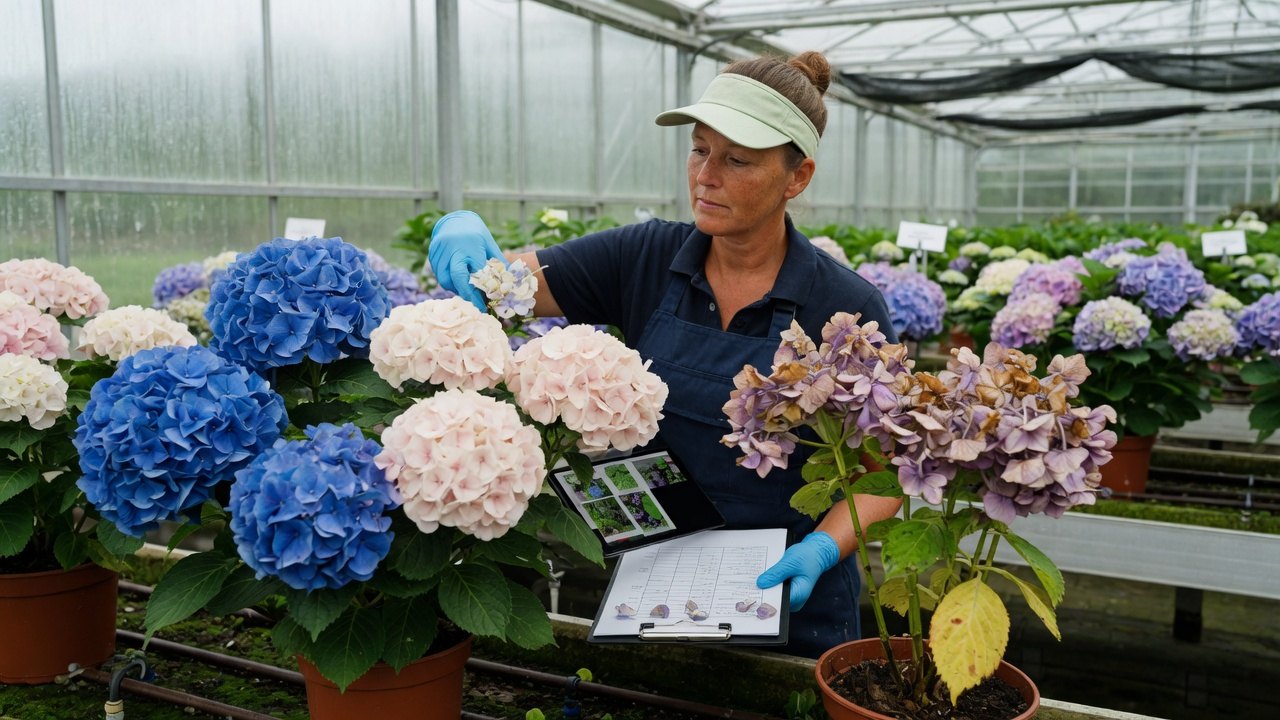
Every grower I meet wants to talk about pruning, varieties, or color manipulation. But when I walk into a greenhouse where flowering is weak, where color is muddy, where stems bend instead of snap, I do not look at the plants first. I look at the substrate and the water. These two elements form the silent foundation under every decision you make. If they are mismatched, nothing else matters. In 25 years of growing hydrangeas, I have seen more crops fail from a bad substrate-water relationship than from pests, diseases, or market shifts combined.
Why substrate and water must work as one system
Hydrangeas are not forgiving. They demand a specific balance of air, water, and nutrients at the root zone. The substrate you choose determines how much air and water your roots can access. The water you apply determines the chemistry of that root zone. If your water is high in bicarbonates (common in well water) and your substrate has low buffering capacity, the pH will drift upward within weeks. That drift locks up iron and manganese. Your leaves turn pale, your stems weaken, and your flowers lose intensity.
I have seen growers switch to a premium substrate but keep using hard water without adjustment. Within one cycle, they see interveinal chlorosis and blame the variety. But the problem was never the genetics. It was the mismatch between water chemistry and substrate buffering.
- Check your water source first. Send a sample to a lab. Measure pH, EC, alkalinity, and sodium levels. Do this before you choose a substrate.
- Match substrate buffering to your water. If your alkalinity is above 100 mg/L CaCO3, choose a substrate with higher lime content. If it is low, reduce buffering to avoid pH spikes.
- Monitor EC in the root zone, not just the feed. I use the pour-through method weekly. Target EC for hydrangeas is 1.5 to 2.0 mS/cm during active growth, lower during color development.
- Do not ignore drainage. Hydrangea roots need oxygen. A substrate that holds too much water will suffocate roots, even if your water quality is perfect.
The color connection: how substrate and water determine blue or pink
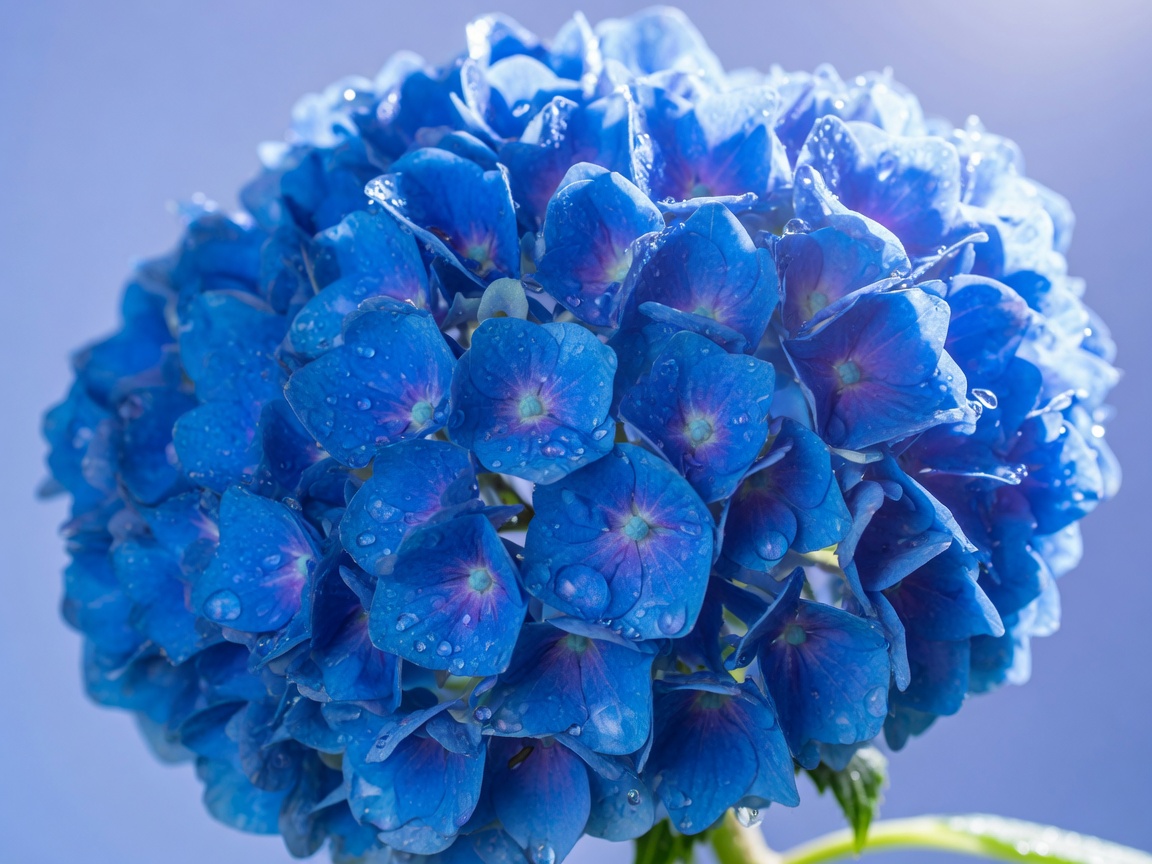
Color in hydrangeas is not a variety trait alone. It is a chemical response to aluminum availability. Aluminum is present in most soils, but it becomes available to the plant only when the root zone pH is below 5.5. If your water is alkaline and your substrate has weak buffering, you will fight to keep pH down. I have seen growers spend heavily on aluminum sulfate while ignoring that their irrigation water pushes pH back up every day.
To get true blue, you need consistent pH 5.0 to 5.5 at the root zone. That requires a substrate with low buffering capacity and water with low alkalinity. If you cannot change your water source, you must acidify. But acidification is not a one-time fix. It is a constant adjustment based on daily readings.
I have seen growers spend heavily on aluminum sulfate while ignoring that their irrigation water pushes pH back up every day. That is not a color program. That is a money drain.
Practical steps to get the foundation right
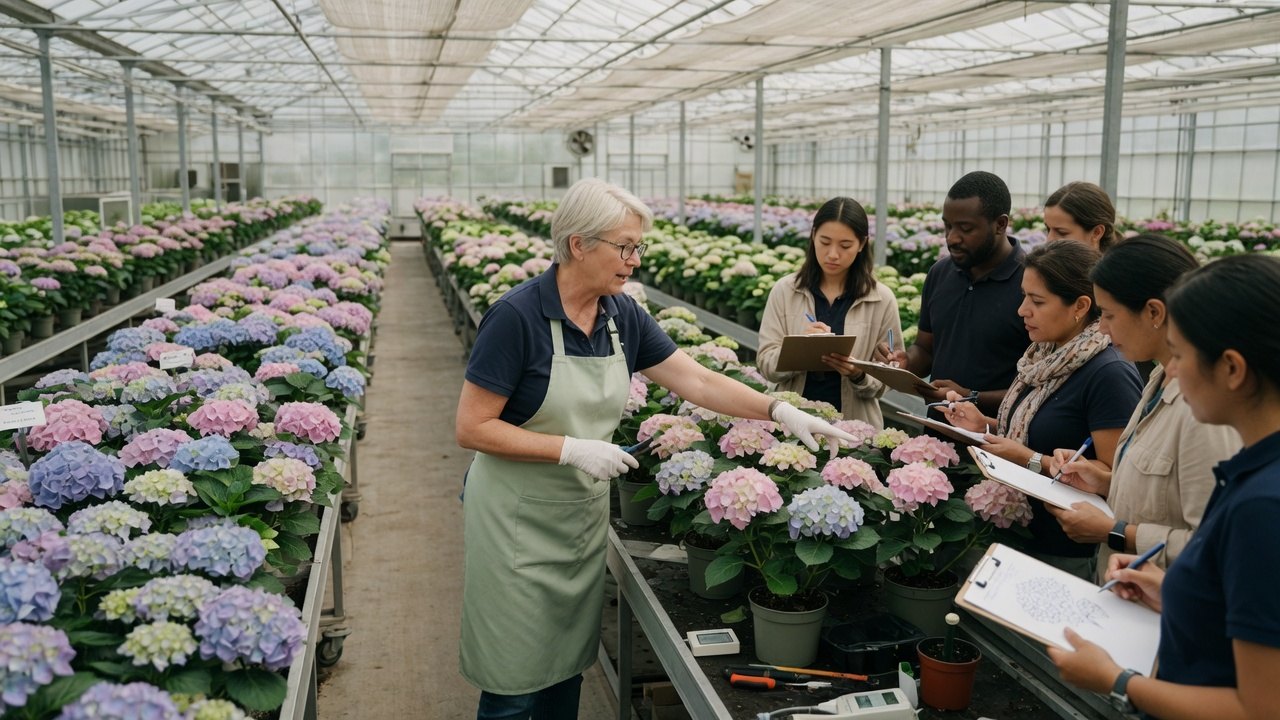
I do not believe in complicated systems. I believe in measuring what matters and adjusting before symptoms appear. Here is a simple protocol I use in our own nursery and teach in the Growing Hydrangeas for Cutting course.
- Test water monthly. Not just pH and EC. Include alkalinity, calcium, magnesium, and sodium. Sodium above 50 mg/L is a red flag.
- Choose substrate based on water test results. For low-alkalinity water, use a peat-based mix with minimal lime. For high-alkalinity water, add more lime or use a substrate with clay or coco coir for buffering.
- Monitor drainage water. The pH and EC of what runs out of the pot tells you what is happening in the root zone. Keep a log. Compare week to week.
- Adjust feed accordingly. If drainage EC is rising, reduce feed concentration. If pH is drifting, adjust your acid injection or change your fertilizer blend.
Getting the substrate and water right does not require expensive technology. It requires discipline and a willingness to measure. At Van Klaveren Plant, we have used the same principles for decades. They work whether you grow in open field, greenhouse, or container. If you want to see how these principles translate into a complete growing system, explore the business case behind our approach. Or if you are ready to stop guessing and start measuring, join the full course where I walk through every step with real data from our own crops.
Put this into practice
The flagship program turns thinking like this into a season-by-season system.
Explore the program